The Year 2 Leap: Which Sophomore WRs Are Ready to Break Out in 2026?
Rookie receiving yards tell us what happened. They don't necessarily tell us what happens next. We analyzed seven notable receivers from the 2025 rookie class to find the underlying signals that could point toward a major Year 2 jump.
The sophomore wide receiver breakout has become one of fantasy football's favorite bets.
But simply drafting a talented second-year receiver isn't enough. A true breakout usually requires some combination of target earning, efficiency, an expanding role and an offense capable of creating valuable opportunities.
So instead of simply ranking these players by rookie receiving yards, EdgeLine went back through the 2025 play-by-play data.
We looked at target share, air-yard share, yards per target, EPA per target, explosive plays, red-zone involvement and whether each player's role grew or shrank as his rookie season progressed.
Then we added the part historical data can't know: what changed around them in 2026?
What We're Looking For
Luther Burden III
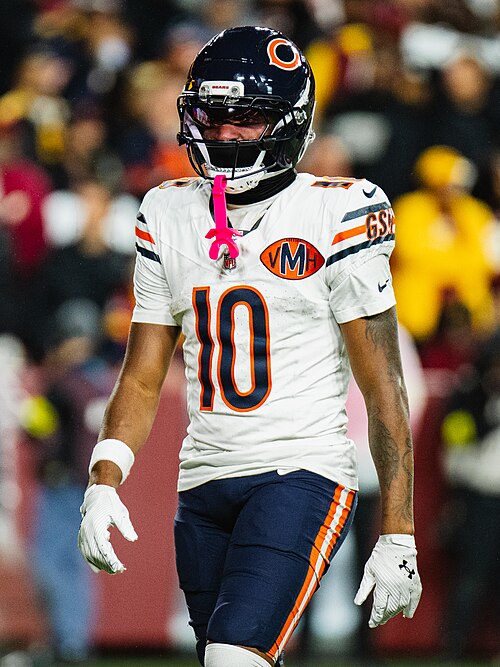
No receiver in this study produced a more compelling combination of efficiency and expanding opportunity than Luther Burden III.
Burden finished his rookie season with only 60 targets and an 11.2% team target share, but what he did with those opportunities was exceptional: 10.87 yards per target, +0.501 EPA per target, 7.11 yards after catch per reception and an 18.3% explosive-target rate.
Efficiency on limited volume can be deceptive. What separates Burden is what happened when the Bears began giving him more work.
His workload increased from just 2.14 targets per game in Weeks 1–9 to 5.62 targets per game from Weeks 10–18. His receiving production climbed from 24.4 to 60.1 yards per game.
Normally, we would expect at least some efficiency regression as volume increases. Instead, Burden still averaged 10.69 yards per target during the higher-volume second half.
That's the signal. Burden doesn't need to become dramatically better on a per-target basis. The breakout case is built around substantially more opportunities reaching a player who has already shown he can do damage with them.
Emeka Egbuka
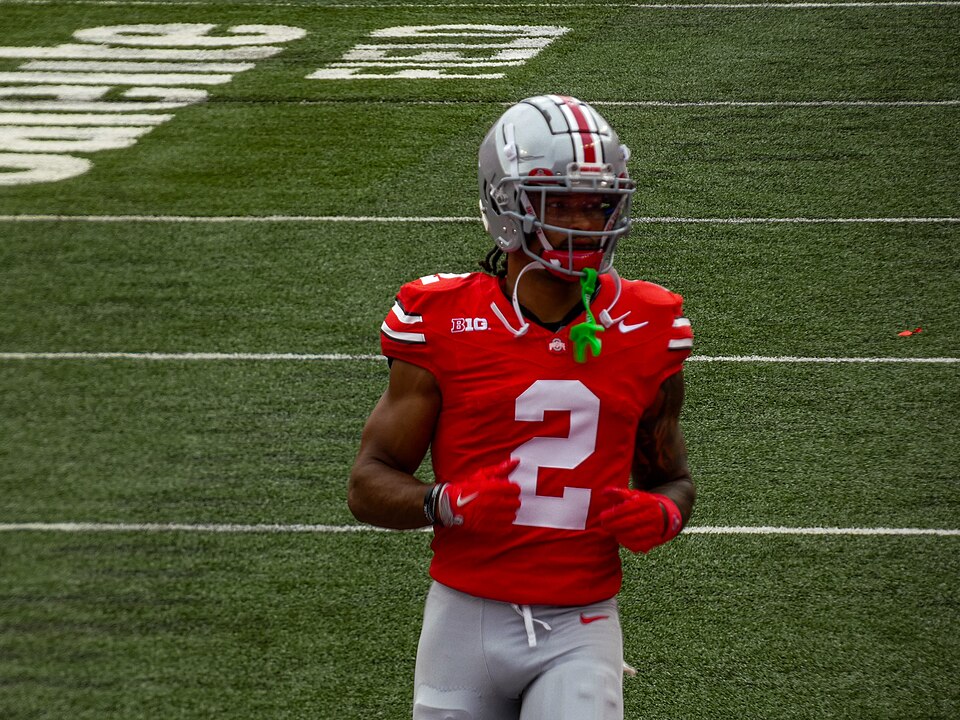
Burden's breakout case depends on what happens when the volume arrives. Egbuka already showed that he can command WR1-level opportunity.
As a rookie, Egbuka drew 127 targets, 23.5% of Tampa Bay's team targets and 36.2% of its air yards. He also received 15 red-zone targets.
That's an unusually substantial rookie workload and gives us confidence that target earning itself is not the question.
The concern is his trajectory. Egbuka's production declined from 70.2 receiving yards per game in Weeks 1–9 to 41.8 from Weeks 10–18, while his yards per target fell from 8.78 to 5.88.
That said, the biggest reason to expect another step forward is the departure of Mike Evans. Even in an injury-shortened 2025, Evans remained a high-value part of Tampa Bay’s passing attack, and historically he had averaged roughly 130 targets per season over the previous 11 years. Those opportunities won’t all flow to one receiver, but Egbuka is the most obvious candidate to absorb a meaningful share. Tampa Bay is already positioning him for a larger role in 2026, settling him into the “Z” receiver spot after asking him to move across all three receiver positions as a rookie. We also saw what that opportunity can look like when Evans and the other veteran receivers were unavailable: Egbuka became the focal point of the passing game and produced 677 yards and six touchdowns through his first nine games. With Evans gone permanently, Egbuka enters Year 2 with both a proven ability to handle featured-receiver volume and a clearer path to maintaining it for an entire season.
His Year 2 breakout therefore looks different from Burden's. Egbuka doesn't necessarily need a massive increase in target share. If he maintains his established role while converting those opportunities more efficiently and consistently, the fantasy ceiling is already substantial.
Tetairoa McMillan
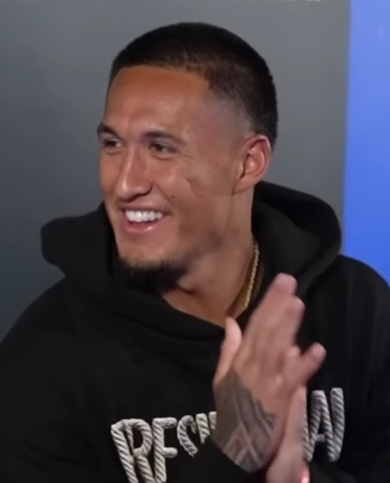
McMillan creates an unusual problem for an article about sophomore breakouts: he may have already broken out.
His rookie opportunity profile was enormous. McMillan commanded 25.3% of Carolina's targets and an extraordinary 43.3% of the team's air yards while finishing with 1,013 receiving yards and seven touchdowns.
There isn't much evidence that he needs a larger role. A 25% target share already represents featured-receiver usage.
Instead, McMillan's next fantasy leap may depend on the offense surrounding him. A receiver can improve substantially without increasing his target share if the team creates more total passing yards, touchdowns and red-zone possessions.
Pat Bryant
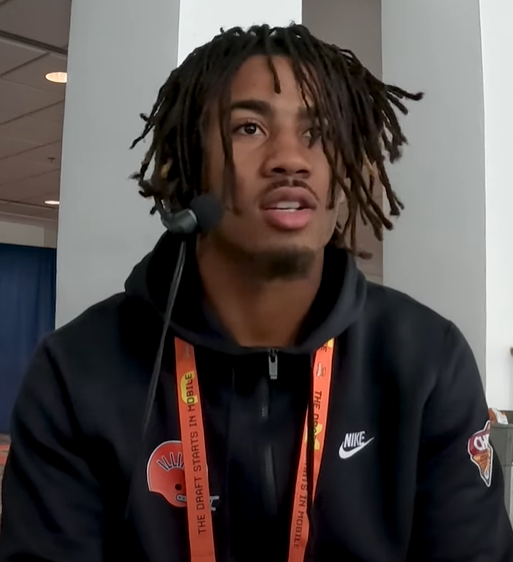
If we looked only at rookie-season trajectory, Bryant would be one of the more intriguing players in this study.
His targets increased from 2.83 to 5.33 per game in the second half. His receiving production jumped from 17.7 to 45.3 yards per game.
More importantly, the additional workload didn't hurt his efficiency. His yards per target actually increased from 6.24 to 8.50.
That's normally the sort of late-season development we'd want to target aggressively entering Year 2.
But this is also why offseason context matters. An improving receiver still needs enough routes and targets for that improvement to matter in fantasy. The problem for Bryant isn't what he showed as a rookie — it's the traffic in front of him. Denver returns Courtland Sutton, who led the team with 1,017 receiving yards in 2025, and Marvin Mims Jr., while also making a massive offseason investment in Jaylen Waddle, sending a first-round pick as part of the package to acquire him from Miami. The Broncos didn't make that move to give Waddle a secondary role; the team has described him as the explosive element it wanted to add to the offense, and Denver's current depth chart lists Waddle, Sutton and Mims as its three starting receivers, with Bryant directly behind Sutton. Tight end Evan Engram also remains another established option in the passing game. Bryant's late-rookie surge suggests there may be more talent and production coming, but fantasy breakouts require routes and targets. With Waddle, Sutton, Mims and Engram all competing for Bo Nix's attention, Bryant may simply have a difficult path to enough volume for a true Year 2 breakout.
Chimere Dike

Dike owns perhaps the strangest profile in the group.
Despite commanding only a modest share of Tennessee's overall passing game, he accounted for 27.5% of the team's red-zone targets — the highest rate among the seven receivers in this study.
That's meaningful for fantasy because touchdown growth can create a statistical leap without requiring 130 targets.
Dike's role was clearly growing as his rookie season progressed. His targets increased from 3.67 per game in Weeks 1–9 to 5.13 over the final eight games, while his receiving production climbed from 21.6 to 28.6 yards per game. He also scored three of his four receiving touchdowns during that second-half stretch. The concern is that increased opportunity didn't come with increased efficiency: Dike averaged 5.88 yards per target in the first half and 5.59 in the second. The usage trend is encouraging, particularly alongside his unusually strong red-zone involvement, but he'll likely need to create more production per opportunity for that growing role to turn into a true Year 2 breakout.
That said, until the efficiency or overall role improves, his red-zone usage looks more like an intriguing specialty than evidence of an imminent full breakout.
Elic Ayomanor
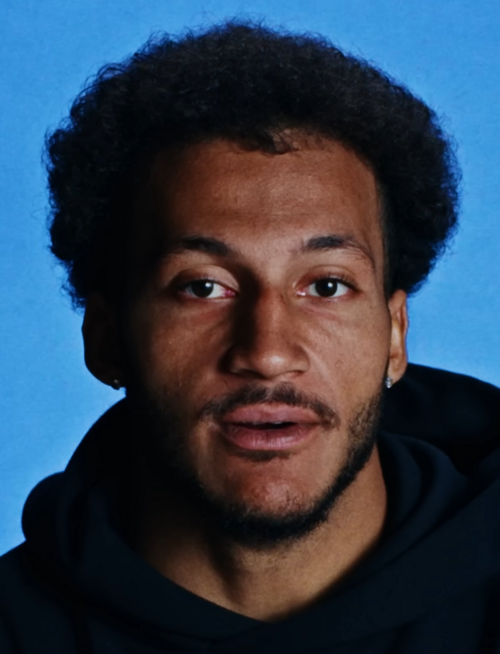
Ayomanor received enough opportunity as a rookie to deserve attention. A 16.8% target share and 28.7% air-yard share are meaningful numbers for a first-year receiver.
The problem is that the opportunity didn't translate into particularly strong production.
Ayomanor generated only 5.79 yards per target with -0.108 EPA per target, and his production declined rather than accelerated during the second half of the season.
That's very different from Burden, Higgins and Bryant, whose workloads expanded while maintaining or improving their per-target production.
Jayden Higgins
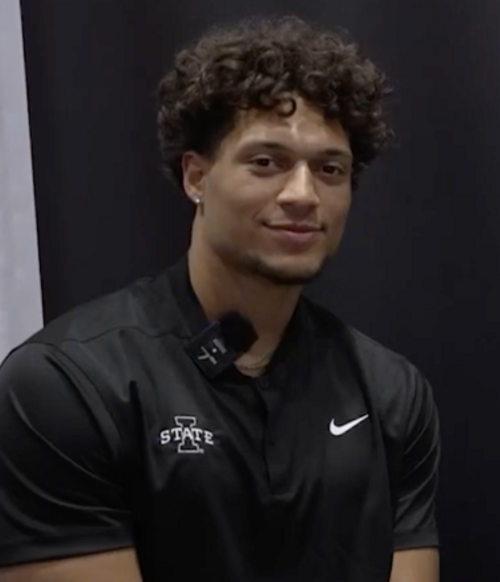
Higgins deserves inclusion because his rookie profile was beginning to produce several of the exact signals we're looking for.
His targets increased from 2.75 to 5.22 per game in the second half, while receiving production more than doubled from 19.9 to 40.7 yards per game.
Most encouragingly, his efficiency improved as his workload grew — from 7.23 to 7.79 yards per target.
That's a legitimate sophomore-breakout profile: increasing volume without deteriorating efficiency.
Unfortunately, Higgins' injury removes the possibility of that Year 2 breakout occurring in 2026.
The EdgeLine Sophomore WR Verdicts
These aren't overall fantasy rankings. They're our assessment of how strongly each player's rookie profile and 2026 situation support a meaningful Year 2 leap.
| Receiver | 2026 Verdict |
|---|---|
| Luther Burden III | 🔥 Strongest Breakout Signal |
| Emeka Egbuka | 🔥 Strong Breakout Candidate |
| Tetairoa McMillan | 📈 Ascending Star — Already Arrived |
| Pat Bryant | ⚠️ Breakout Blocked by Opportunity |
| Chimere Dike | ➡️ TD Upside, Needs More Efficiency |
| Elic Ayomanor | ⚠️ Breakout Case Overstated |
| Jayden Higgins | 🚑 Out for 2026 |
The Bottom Line
The biggest lesson from this group is that rookie receiving yards alone don't tell us who is about to make the next leap.
McMillan already had elite opportunity. Egbuka already proved he could command targets. Bryant showed a textbook late-season ascent but faces a more complicated path to volume.
Dike's red-zone usage gives him a potential scoring path, while Ayomanor still needs to show that meaningful opportunity can translate into efficient NFL production.
But Burden's profile contains something different.
He produced elite efficiency on limited opportunity, then maintained that efficiency when his workload expanded.
That's the combination we're looking for:
proven efficiency + growing usage + expanding opportunity.
Of the sophomore receivers we studied, Luther Burden III enters 2026 with the clearest statistical breakout signal.