4 QBs who may be undervalued after offensive changes.
New play-callers don't guarantee better fantasy production. But when a coordinator change creates a plausible path to more efficient passing, more quarterback-friendly concepts, or simply a better offensive environment, draft cost deserves another look.
Fantasy football analysis tends to focus on player movement: a new receiver, a new running back, an upgraded offensive line. But one of the biggest offseason changes can happen without a player changing teams at all.
Change the person designing and calling the offense, and the same quarterback can suddenly have a very different fantasy ceiling.
That's the idea behind this list. I'm not calling these four quarterbacks guaranteed breakouts, and I'm not ranking the four best quarterbacks in football. I'm looking for situations where the offensive environment has changed enough that the quarterback's current fantasy price may not fully reflect the upside.
The things I'm looking for are simple: evidence the new system can help the passing game, a reasonable fit with what the quarterback does well, encouraging signs from the transition, and an ADP that still leaves room for the bet to pay off.
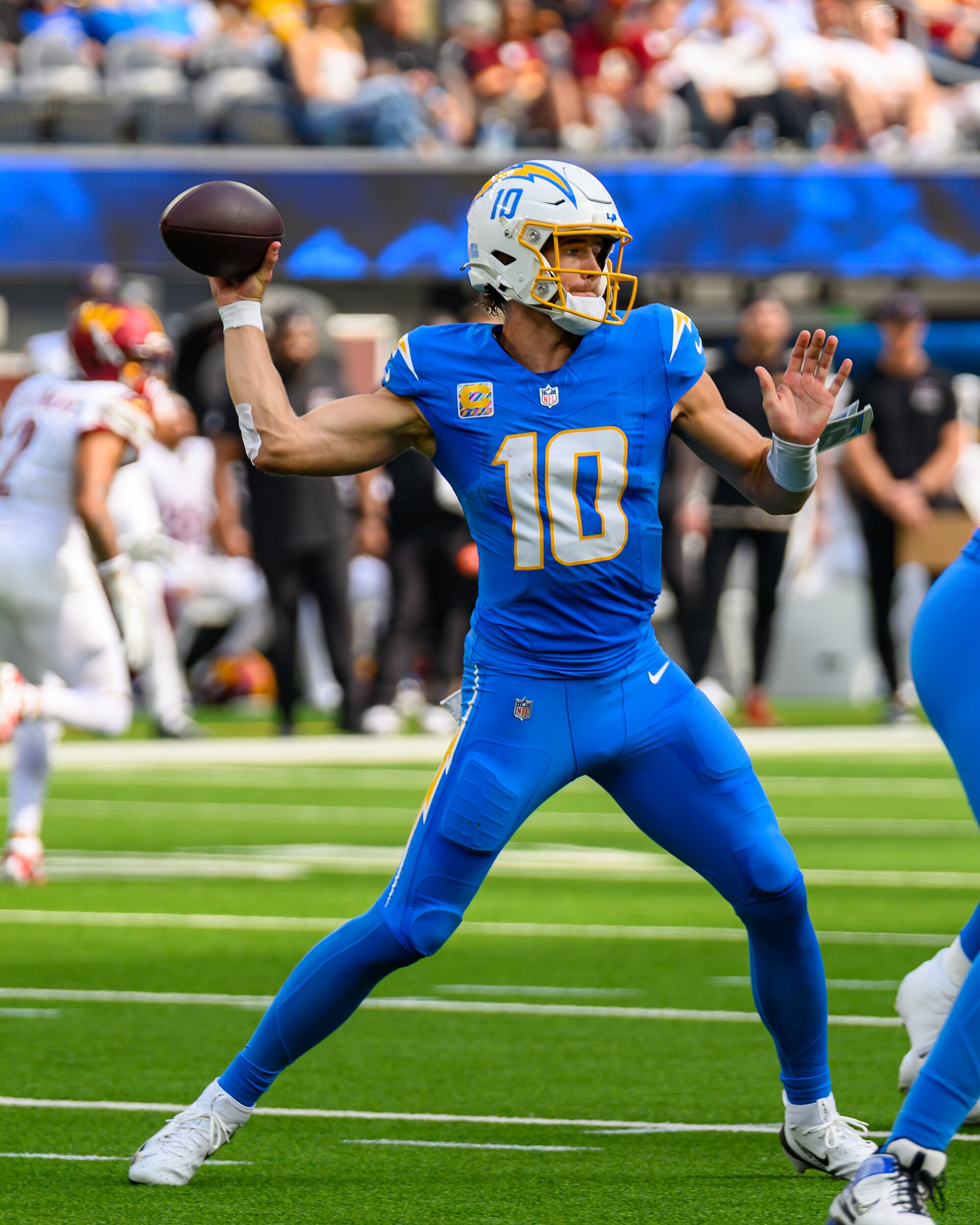
Justin Herbert
Herbert is the cleanest example of what I'm looking for.
The talent has never really been the question. Herbert has already shown that he can support massive passing volume, but the fantasy results have not consistently matched the ceiling suggested by his arm talent. Now Mike McDaniel gets a chance to redesign the environment around him.
One early detail is especially interesting: the Chargers have worked on Herbert's shotgun footwork so he can catch the snap and get the ball out faster. Herbert has described the goal as creating better timing and giving receivers more opportunity to run after the catch. That's a small mechanical change, but it tells us something about what McDaniel wants this offense to become — quicker, more rhythmic and better at creating space.
McDaniel has also said Herbert is considerably further along than quarterbacks normally are in the first year of the system. That doesn't guarantee the offense explodes immediately, but it reduces one of the obvious concerns with any major scheme change: the learning curve.
History- McDaniel's best evidence of the passing ceiling came in 2023, when Tua Tagovailoa started all 17 games and led the NFL with 4,624 passing yards while throwing 29 touchdowns. In McDaniel's only season as San Francisco's offensive coordinator, Jimmy Garoppolo threw for 3,810 yards despite starting just 15 games.
Weapons- Herbert isn't lacking weapons, either. Ladd McConkey gives him a high-end separator and YAC threat, Quentin Johnston and Tre Harris provide size and vertical ability, Oronde Gadsden II adds another receiving mismatch at tight end, and Omarion Hampton gives McDaniel a talented backfield centerpiece. Perhaps just as importantly, a healthier and reworked offensive line could give Herbert a much better environment than he had in 2025.
And then there's the price. Herbert is currently around QB9 in FantasyPros consensus ADP. That's not a deep sleeper, but it does mean fantasy managers can potentially buy the upside of an elite physical quarterback without paying an elite-QB draft price.
Herbert's NFL Production by Offensive Coordinator
| Year | Games | Pass Yards | TD | INT | Fantasy Finish | Offensive Coordinator |
|---|---|---|---|---|---|---|
| 2020 | 15 | 4,336 | 31 | 10 | QB7 | Shane Steichen |
| 2021 | 17 | 5,014 | 38 | 15 | QB2 | Joe Lombardi |
| 2022 | 17 | 4,739 | 25 | 10 | QB11 | Joe Lombardi |
| 2023 | 13 | 3,134 | 20 | 7 | QB16 | Kellen Moore |
| 2024 | 17 | 3,870 | 23 | 3 | QB11 | Greg Roman |
| 2025 | 16 | 3,727 | 26 | 13 | QB10 | Greg Roman |
| 2026 | — | — | — | — | — | Mike McDaniel |
One potential source of additional fantasy upside could come near the goal line. Herbert's offenses have actually passed at almost exactly the same overall red-zone rate as Mike McDaniel's previous offenses — 53.4% for each. But inside the 10-yard line, the difference becomes more interesting. During Herbert's two seasons under Greg Roman, the Chargers passed on just 46.1% of qualifying plays inside the 10. McDaniel's offenses have averaged 53.9%. His 2022 Dolphins threw on 61.8% of those plays, while the 2024 Dolphins were at 56.2%. That doesn't guarantee Herbert suddenly receives substantially more goal-line passing opportunities, but it provides another potential path to increased touchdown production. A shift from Roman's recent run-heavy approach near the goal line toward McDaniel's historical tendencies could put more scoring opportunities back in Herbert's hands.
Passing Tendency Near the Goal Line
| Offense / Period | Red-Zone Pass % | Inside-10 Pass % |
|---|---|---|
| Herbert Career (2020–25) | 53.4% | 50.1% |
| Herbert + Greg Roman (2024–25) | 51.0% | 46.1% |
| Mike McDaniel Offenses (2021–25) | 53.4% | 53.9% |
Source: nflverse play-by-play. Regular season. Pass/rush plays beginning inside the opponent's 20 and 10-yard lines.
Herbert doesn't need to become a different quarterback. If McDaniel can create easier throws, more yards after catch and a more aggressive passing environment, QB9 may undersell the ceiling.
ADP and reporting checked Aug. 24, 2026. Sources: FantasyPros, Chargers.com and NFL.com.
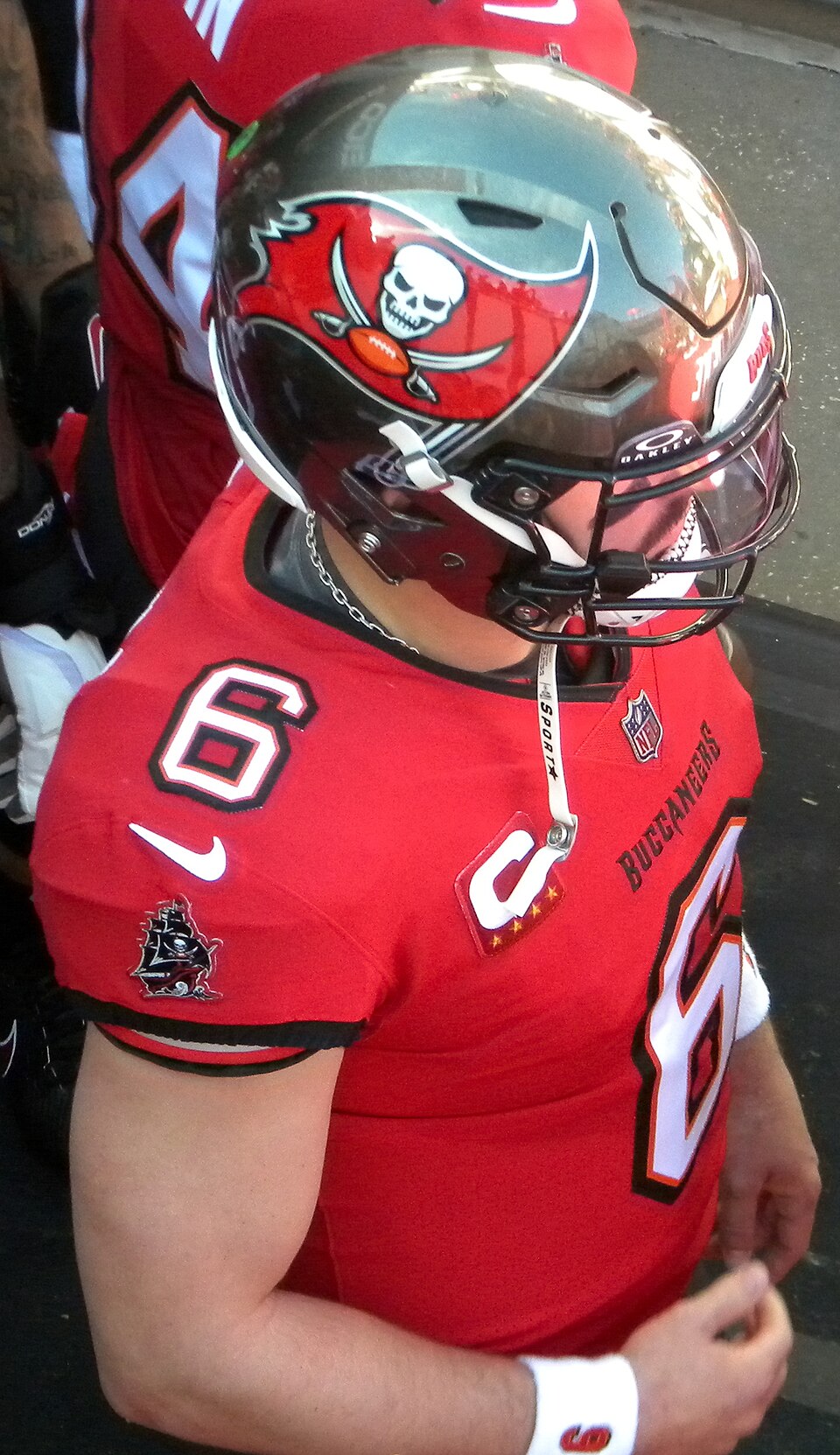
Baker Mayfield
Baker Mayfield may be the most interesting price on this list because the fantasy case does not require a massive breakout. At approximately QB18 in FantasyPros consensus ADP, you're paying a backup-QB price for a veteran who has already shown he can produce usable fantasy weeks.
The Zac Robinson angle is a little different from Herbert's Mike McDaniel case. Robinson's Atlanta offenses were not especially pass-heavy, aggressive on early downs, or quarterback-centric near the goal line. The one trait that did repeat across both of his seasons as Atlanta's offensive coordinator was sack avoidance.
In 2023, the year before Robinson arrived, Atlanta allowed sacks on 7.0% of its dropbacks, ranking 21st in the NFL. Under Robinson, that rate improved to 5.4% in 2024, seventh-best in the league, and then to 4.5% in 2025, fifth-best. Two seasons are not enough to prove Robinson's scheme caused the improvement, but consecutive top-seven finishes suggest there may be something repeatable about how his offense keeps the quarterback out of negative plays.
That matters for Mayfield because his recent fantasy production has been noticeably better when he stays clean. Across the 2024 and 2025 regular seasons, Baker averaged 22.0 fantasy points per game when taking zero or one sack. That dropped to 17.6 points when taking two sacks and 16.3 points when taking three or more.
The interesting part is that his passing yardage did not collapse in the high-sack games. Instead, the damage showed up where fantasy managers feel it most: touchdowns and turnovers. In games with zero or one sack, Baker averaged 2.31 passing touchdowns and 0.69 interceptions. With three or more sacks, those numbers fell to 1.64 touchdowns and 1.18 interceptions.
Baker Mayfield When Kept Clean
| Sacks Taken | Games | Fantasy Pts | Pass Yds | Pass TD | INT |
|---|---|---|---|---|---|
| 0–1 | 13 | 22.0 | 250.5 | 2.31 | 0.69 |
| 2 | 10 | 17.6 | 216.7 | 1.90 | 0.50 |
| 3+ | 11 | 16.3 | 251.7 | 1.64 | 1.18 |
Baker Mayfield, 2024–25 regular season. Standard 4-point passing-TD fantasy scoring. Source: nflverse play-by-play.
That's why I don't necessarily view Baker as an every-week QB1 target. I like him more as a matchup-driven QB2. If Robinson's ability to limit sacks carries over to Tampa, Baker could become especially attractive in weeks against defenses that struggle to generate pressure.
At QB18, that profile is useful. You don't need to bet on Robinson turning Mayfield into a top-five fantasy quarterback. You need a veteran starter whose ceiling becomes much more appealing in the right matchup — and the early data suggests protection may be one of the clearest indicators of when those weeks are coming.
Baker is best viewed as a high-upside QB2 and potential streaming option. Robinson's Atlanta offenses ranked seventh and fifth in sack rate over the last two seasons, while Mayfield has averaged 5.7 more fantasy points per game when taking zero or one sack compared with three or more. If that protection profile follows Robinson to Tampa, Baker could be particularly valuable against weaker pass-rush opponents.
ADP checked Aug. 24, 2026. Sack-rate and Baker fantasy splits calculated from nflverse regular-season play-by-play, 2023–25. Two seasons of Robinson data are descriptive and should not be treated as proof of causation.
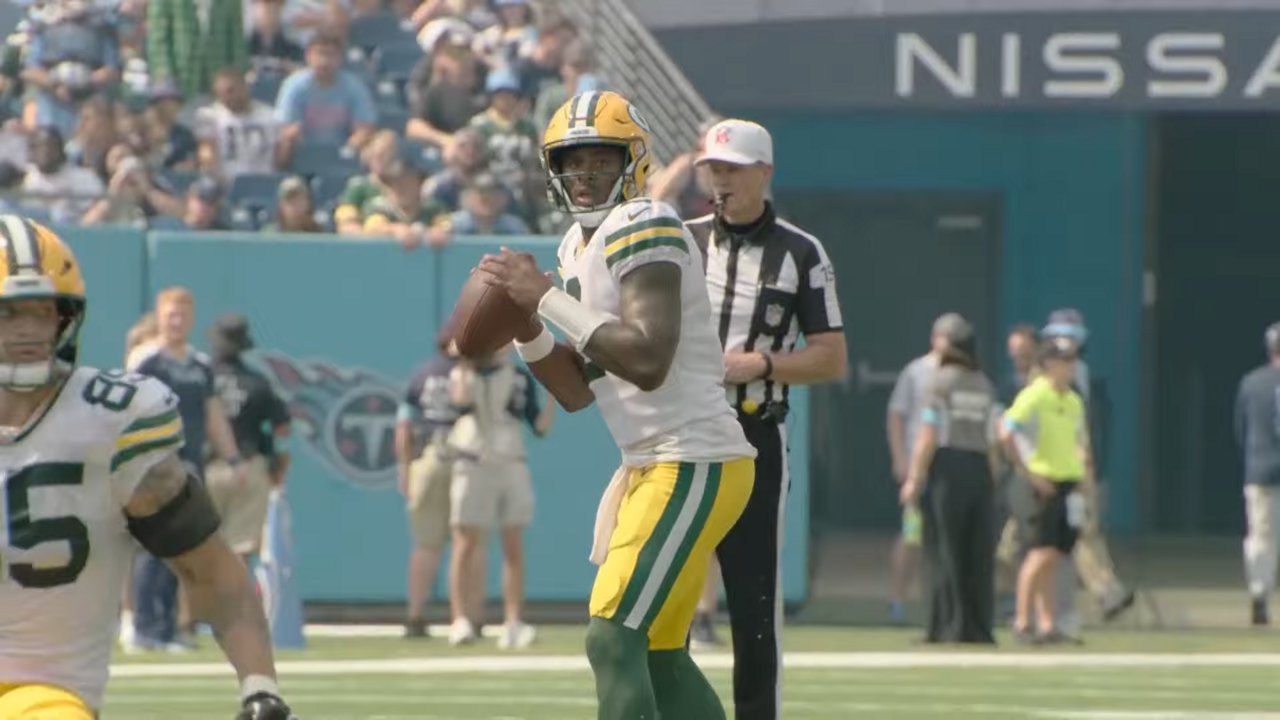
Malik Willis
Malik Willis is the highest-variance quarterback on this list, but he may also have the clearest path to outperforming traditional passing-based projections. The reason is simple: his legs create fantasy points that don't require him to become a high-volume passer.
Bobby Slowik's history does not suggest that Miami is about to build an offense around constant designed quarterback runs. In Houston, C.J. Stroud had 14 designed rushes in 2023 and only 3 in 2024. So the case for Willis isn't that Slowik has historically operated a quarterback-run-heavy system.
What is more interesting is Slowik's willingness to use his quarterback near the goal line. Across his two seasons as Houston's offensive coordinator, Stroud recorded 18 red-zone rushing attempts, including 11 attempts inside the 10-yard line and 8 inside the 5. That came from a quarterback whose rushing ability was never a central part of his NFL profile.
Willis presents a very different type of weapon. During his 2024 and 2025 seasons in Green Bay, Willis produced 269 rushing yards and 3 rushing touchdowns on only 34 non-kneel quarterback carries.
Even more impressive is how that production was generated. Willis averaged 6.94 yards per designed run and 8.88 yards per scramble. He was equally effective when the run was called for him and when a passing play broke down.
Malik Willis' Rushing Efficiency
| Rush Type | Attempts | Yards | Yards / Rush |
|---|---|---|---|
| Designed QB Runs | 17 | 118 | 6.94 |
| Scrambles | 17 | 151 | 8.88 |
| Total | 34 | 269 | 7.91 |
Malik Willis, 2024–25 regular season. Kneel-downs excluded. Source: nflverse play-by-play.
From a fantasy perspective, those 34 rushing attempts generated 44.9 fantasy points from rushing alone. That's 1.32 fantasy points every time Willis carried the football. A quarterback producing that much value on the ground can remain fantasy relevant without needing 300 passing yards every Sunday.
That's where the Slowik pairing becomes intriguing. Slowik has already shown that he is willing to involve a much less mobile quarterback near the goal line. Willis gives him a considerably more dangerous option on designed keeps, read-option concepts, broken plays and red-zone quarterback runs.
The upside case isn't that Slowik transforms Willis into an elite pocket passer. It's that an offense designed to keep the quarterback efficient can now layer in a rushing weapon that Slowik simply didn't have with Stroud.
Willis may be undervalued because traditional quarterback projections are heavily driven by passing volume. His 2024–25 sample produced 269 rushing yards and 3 touchdowns on just 34 non-kneel carries, including 6.94 yards per designed run and 8.88 yards per scramble. If Slowik gives Willis even modest designed rushing and red-zone usage, that ground production could provide a fantasy floor — and ceiling — that his passing projections alone won't capture.
Rushing splits calculated from nflverse regular-season play-by-play for 2024–25. Slowik's Stroud rushing usage is from Houston's 2023–24 regular seasons. Small samples should be treated as indicators of potential rather than guarantees of future usage.
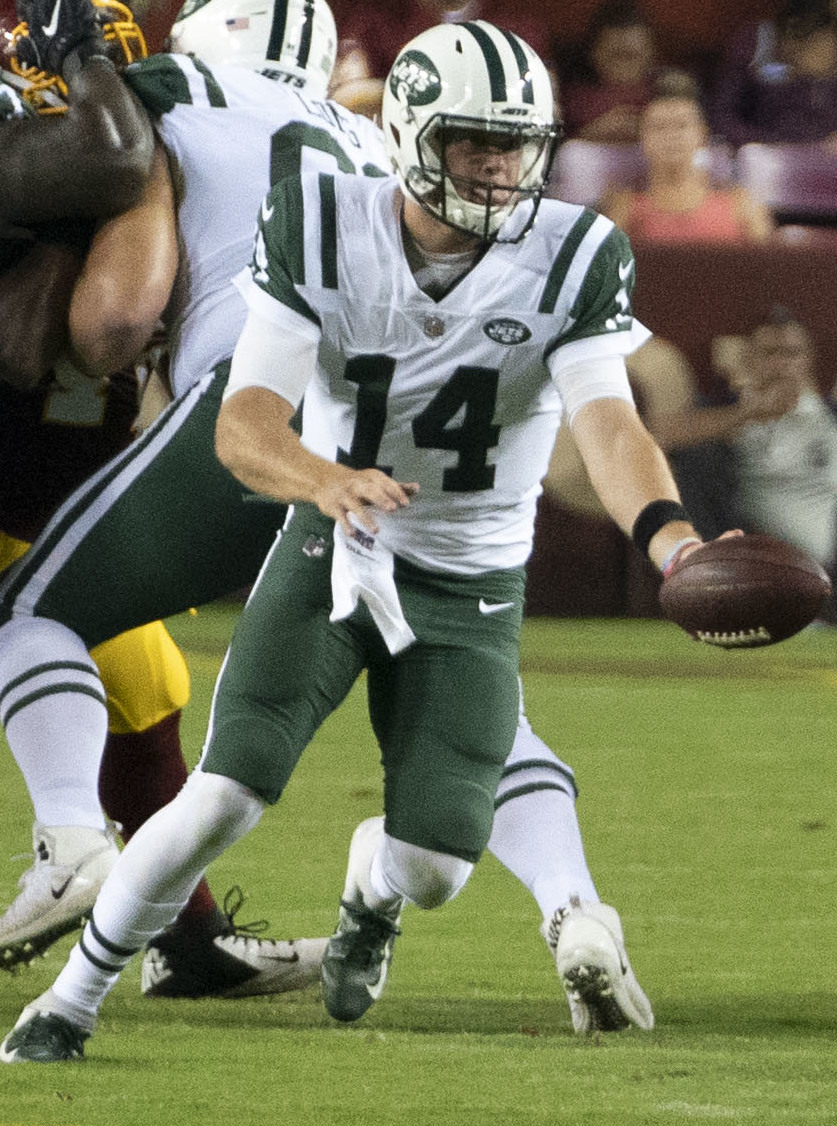
Sam Darnold
Sam Darnold may be the easiest quarterback on this list to take a chance on because the market is asking almost nothing for him. At approximately QB24 in FantasyPros consensus ADP, he is being drafted as a low-end QB2 or waiver-wire-level option in many one-quarterback leagues.
That price becomes more interesting when you isolate one part of Darnold's game that has quietly been elite for two straight seasons: downfield passing.
On throws traveling at least 20 yards in the air, Darnold ranked first in the NFL in yards per attempt in both 2024 and 2025. In 2024 with Minnesota, he averaged 17.13 yards per attempt on those throws while completing 49.3% of them. In 2025 with Seattle, that improved to 18.45 yards per attempt with a 52.8% completion rate.
The efficiency numbers tell the same story. Darnold ranked third in EPA per attempt on 20+ air-yard throws in 2024 and second in 2025. He also finished first and second in completion percentage on those throws across the two seasons.
Sam Darnold on Throws 20+ Yards Downfield
| Season | Team | Attempts | Comp % | YPA | EPA / Att | TD | INT |
|---|---|---|---|---|---|---|---|
| 2024 | MIN | 69 | 49.3% | 17.13 | +0.891 | 9 | 3 |
| 2025 | SEA | 53 | 52.8% | 18.45 | +0.987 | 7 | 2 |
Regular-season passes traveling at least 20 air yards. Source: nflverse play-by-play.
That's where Brian Fleury becomes interesting. Fleury spent the previous several seasons in San Francisco's Shanahan system before taking over Seattle's offense. The 49ers were not consistently one of the league's most aggressive deep-passing teams, so I would not expect Fleury to suddenly turn Seattle into a vertical offense built around constant deep shots.
What the San Francisco sample does show, however, is that the system can create extremely efficient downfield opportunities when quarterback play and personnel line up. In 2023, San Francisco ranked first in the NFL in EPA per attempt and completion percentage on throws of 20+ air yards, while ranking second in yards per attempt and touchdown rate.
Fleury therefore does not need to teach Darnold how to throw the deep ball. Darnold has already demonstrated that ability across multiple teams and offensive systems. The opportunity is for Fleury to preserve that strength while layering in the spacing, motion and structured answers associated with the offense he comes from.
That distinction matters. Darnold's 2024 and 2025 deep-passing numbers are not the product of one isolated season or one particular receiver room. He carried the same strength from Minnesota to Seattle, which makes it much easier to view it as a real quarterback trait rather than a temporary scheme effect.
Darnold's NFL Rank on 20+ Air-Yard Throws
| Metric | 2024 Rank | 2025 Rank |
|---|---|---|
| Yards / Attempt | #1 | #1 |
| Completion % | #1 | #2 |
| EPA / Attempt | #3 | #2 |
| TD Rate | #7 | #5 |
Minimum 200 total pass attempts and 20 qualifying deep attempts. Source: nflverse play-by-play.
The fantasy argument is therefore less about projecting some brand-new breakout and more about asking whether the market is properly valuing a quarterback with an elite, repeatable downfield skill. At QB24, fantasy managers are not paying for that ceiling.
Darnold still carries risk. Deep passing is naturally volatile, and Seattle's offense will need to generate enough opportunities for that strength to matter consistently. But unlike some late-round quarterbacks whose upside depends on a skill they have never shown, Darnold has already demonstrated his calling card at an elite NFL level for two consecutive seasons.
Darnold is being drafted around QB24 despite ranking first in the NFL in yards per attempt on 20+ air-yard throws in each of the last two seasons. He also ranked top-three in EPA per attempt on those throws both years. Fleury does not need to create Darnold's deep-passing ability — he needs to preserve it while building a structured offense around it. At his current draft price, that proven explosive-play ceiling makes Darnold an inexpensive QB2 with considerably more upside than his ADP suggests.
ADP checked Aug. 24, 2026. Deep-passing splits and NFL rankings calculated from nflverse regular-season play-by-play for 2024–25. San Francisco scheme comparisons use 2022–25 regular-season data and should be treated as contextual evidence, not as proof that Brian Fleury will reproduce identical results in Seattle.
We're betting on changed environments, not guarantees.
There is a reason all four of these quarterbacks are available below the very top fantasy tier. Every case has risk.
Herbert costs the most and still has to prove the new offense materially changes his fantasy output. Mayfield is learning another system. Willis has never carried a full NFL season as a starter. Darnold is adapting to another coordinator and doesn't offer the same rushing floor as some fantasy quarterbacks.
But that's also the point.
Fantasy value doesn't come from identifying players with no downside. It comes from finding situations where the upside may be larger than the price you're being asked to pay.
Offensive coordinator changes are one place where that gap can exist. By the time a new system is clearly working in September, the market will already know. In August, we're trying to identify the possibility before it becomes obvious.